By Wienny N Laksmi · July 31, 2026
Methodology
People often use "yoga" and "meditation" interchangeably, or assume one is just a slower version of the other. They're related, but they're not the same practice, and understanding the difference helps explain why a class at Yoga Omah Joglo looks the way it does.
Two Different Practices, One Shared Goal
The clearest way to put it: yoga generally involves movement, while meditation tends to be still. Yoga trains the body first, while meditation trains the mind. Yoga is a physical practice built around postures, alignment, and breath. Meditation is a mental practice built around stillness, focus, and awareness, often without any physical movement at all.
That said, the line isn't as sharp as it sounds. Yoga itself is typically described as a mind-body practice that combines physical poses, regulated breathing, and meditation. Meditation isn't separate from yoga so much as woven into it, particularly in a method like Iyengar, where sustained focus on alignment and breath is itself a form of concentrated, moving meditation.
What the Research Shows
Both practices have real, measurable effects, though not always identical ones. A study on office-based stress relief found that both yoga postures and guided meditation significantly reduced perceived stress compared to a control group, with the effect lasting after the session ended. Interestingly, the same study found a physiological difference: yoga increased heart rate while meditation reduced it, though both reduced respiration rate compared to control. In other words, yoga can be calming and stimulating at once, while meditation tends to slow the body down more directly.
Yoga also appears to offer physical benefits meditation alone doesn't, including improvements in cardiovascular function and flexibility documented in comparative studies. Meditation, meanwhile, has shown its own distinct effects: a study found that an eight-week meditation practice was associated with changes in the expression of genes regulating inflammation, circadian rhythm, and glucose metabolism, though this was a small study without a non-meditating comparison group, so it should be read cautiously.
The honest takeaway from the research: neither practice replaces the other, they tend to complement each other, working on the body and mind through different mechanisms.
How This Shows Up at Yoga Omah Joglo
We don't run separate, standalone meditation classes, meditation is built directly into the structure of every session as a required part of our methodology, not an optional add-on.
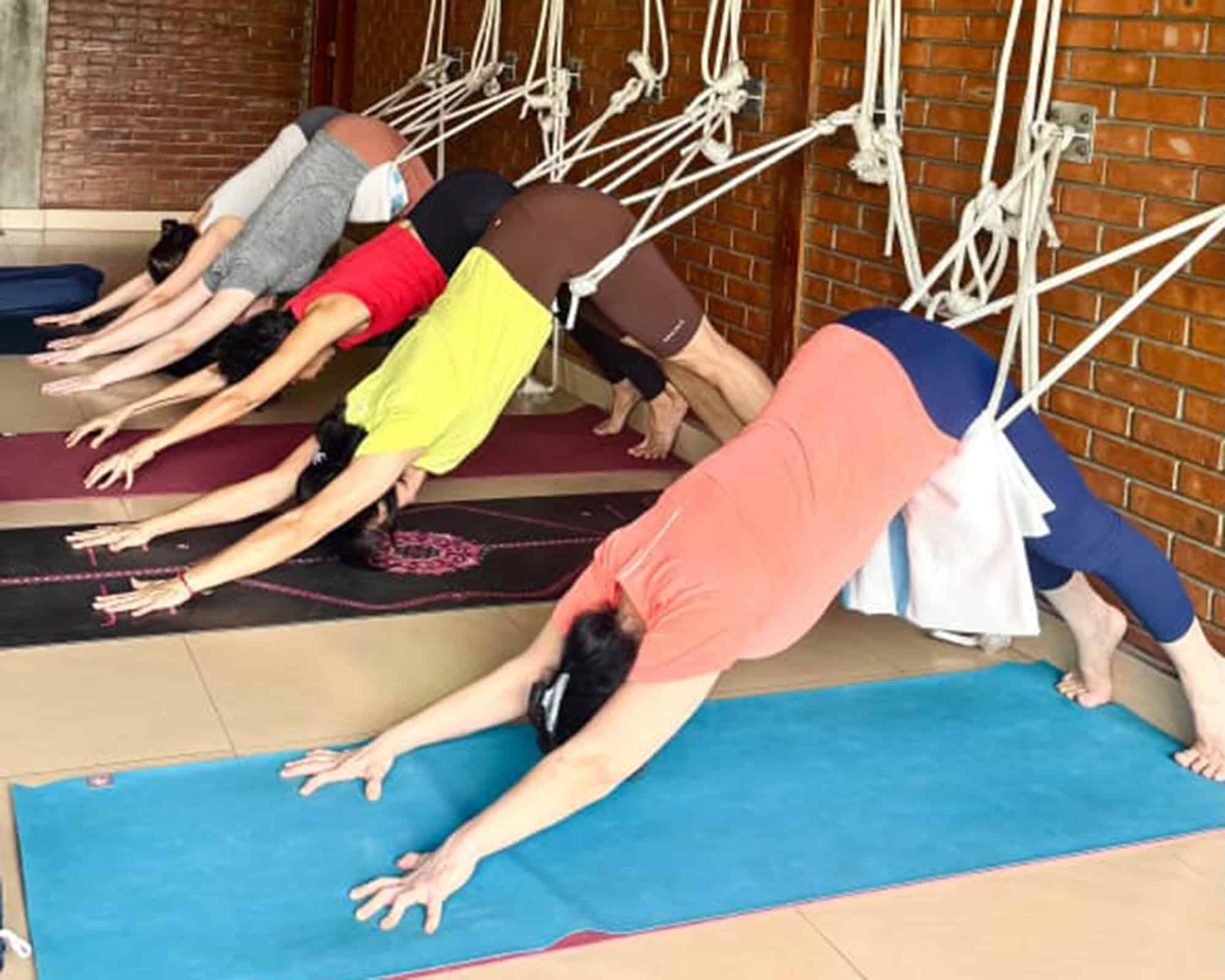
Breath awareness throughout practice. In the Iyengar method, attention to breath isn't a separate step tacked onto the end of class, it's part of how every posture is held and refined. Holding a pose with focused, controlled breathing is, in effect, a moving meditation.
A mandatory closing meditation. Every session at Yoga Omah Joglo ends with a period of meditation, this isn't optional. It's a deliberate part of the methodology: physical practice alone works the body, but without a closing period of stillness, the practice stays incomplete. This closing meditation is what brings the session back into balance, body and soul together, rather than leaving students in a purely physical state when they walk out the door. Depending on the class and the teacher, this closing meditation may be done in silence or with quiet background music, whichever supports the group's focus best that day. For many students, this closing stretch of stillness turns out to be the part of class they look forward to most, the quiet payoff after the physical work is done.
A dedicated contemplative class around Nyepi. Our Nyepi: Yoga and Contemplation session takes this same principle further, an entire class built around stillness and reflection, in keeping with the spirit of the day itself.
If You're Looking for One or the Other
If your primary goal is physical: strength, flexibility, alignment, injury recovery, our Regular Yoga, Yoga for Fitness, or Yoga Therapy programs are the right starting point, and you'll still close every session with meditation as part of the practice. If what you're after is closer to pure stillness and mental focus, the meditative elements built into every class, and especially our Nyepi session, may resonate with you even more.
Either way, you don't have to choose one and rule out the other. In practice, most students end up experiencing both, sometimes without realizing where one ends and the other begins.