By Wienny N Laksmi · June 30, 2026
Prenatal Yoga
A Newer Program, Built on Real Evidence
Prenatal Yoga is a newer offering at Yoga Omah Joglo, and because it's new, we take the safety and clarity around it seriously. Before diving into what the research shows, one thing needs to be said clearly: prenatal yoga is a complementary practice, not a substitute for medical care, and every student should have clearance from their obstetrician before starting.
Lower Cesarean Rates: What the Studies Found
A 2025 meta-analysis published in BMC Pregnancy & Childbirth, combining 14 randomized controlled trials and 3,637 pregnant women, found that those practicing prenatal yoga had significantly lower rates of cesarean section compared to women receiving standard prenatal care alone, along with higher rates of spontaneous vaginal birth and shorter total labor times.
A separate 2025 randomized controlled trial, published in the Journal of Perinatal Medicine, followed 214 first-time pregnant women and found a similar pattern: those in the yoga group had lower rates of in-labor cesarean, a higher rate of spontaneous vaginal birth, and reported less pain during labor than the control group.
It's worth being precise here: these findings describe average outcomes across groups of women in controlled studies, not a guarantee for any individual pregnancy. Cesarean delivery is often medically necessary for reasons entirely unrelated to exercise, fetal position, complications, or maternal health conditions among them, and yoga does not change those medical realities. What the research does suggest is that yoga may reduce the anxiety and fear around labor that, in some cases, contributes to elective or non-emergency cesarean rates.
Why It Might Work: Stress, Not Just Stretching
Mayo Clinic notes that prenatal yoga is generally considered safe and offers real benefits for both mother and baby, largely through its combination of gentle movement, focused breathing, and mental centering, the same combination researchers believe helps reduce fear and anxiety heading into labor.
This matters because fear and anxiety are known contributors to complicated or prolonged labor. A calmer, more prepared nervous system tends to cope better with the physical demands of childbirth, which may help explain why a low-impact practice like yoga shows up so consistently in delivery-outcome research, not because it directly changes anatomy, but because it changes how the body responds to stress during one of its most physically demanding moments.
What a Class Actually Looks Like
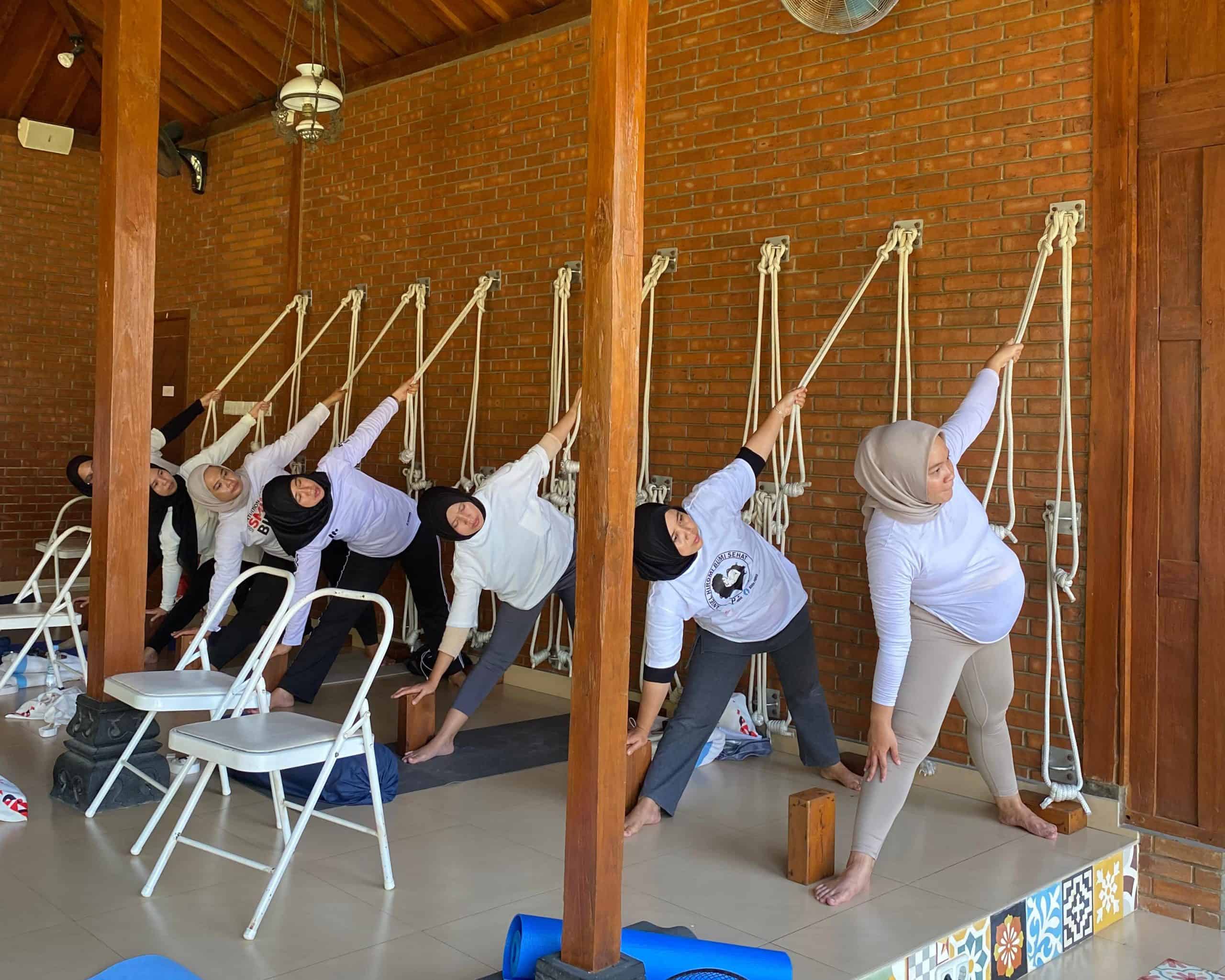
Prenatal yoga at Yoga Omah Joglo is a slower-paced class, adapted specifically for pregnancy, with modifications suited to each trimester. Because this is a newer program, we ask all prospective students to confirm their trimester and any relevant medical notes with us directly, alongside confirmed clearance from their obstetrician.
Sessions focus on:
• Gentle stretching, adapted to avoid overextension, since pregnancy hormones already loosen joints and connective tissue
• Breathing techniques that mirror the kind of controlled breathing useful during labor itself
• Positions and modifications appropriate to each trimester, rather than a one-size-fits-all sequence
Always consult your doctor before starting or continuing any exercise program during pregnancy. Prenatal Yoga is not a substitute for medical care.