By Wienny N Laksmi · May 31, 2026
There's a persistent idea that yoga, or exercise generally, becomes less necessary as we get older, something for gentler stretching at best, or something to be given up altogether once the body starts slowing down. The evidence, and Yoga Omah Joglo's own experience with senior students, suggests the opposite.
A Long Life, Built on Consistent Practice
B.K.S. Iyengar, the founder of the method taught at Yoga Omah Joglo, lived to 95, having practiced yoga daily for the better part of eight decades. He wasn't simply a strong, naturally healthy man who happened to also do yoga; by his own account and those of biographers, he was a frail, sickly child, not expected to live a particularly long or healthy life at all. Decades of consistent, correctly guided practice appear to have played a meaningful role in that trajectory.
This is one man's documented life, not a guarantee or a medical claim about what yoga will do for any individual. Longevity is influenced by many factors, genetics, diet, and overall lifestyle among them. But it's a striking real-world example of what sustained, age-adapted movement can look like over an entire lifetime.
Why Inactivity Is the Real Risk
It's well documented in aging and rehabilitation research that inactivity, not age itself, is often what accelerates physical decline in older adults. Reduced movement leads to muscle loss, stiffer joints, and weaker balance, which in turn increases the risk of falls, one of the most common paths toward losing independence in later life. Staying appropriately active is one of the simplest, most effective ways to slow that decline.
Same Studio, Different Pace: Why This Needed Its Own Program
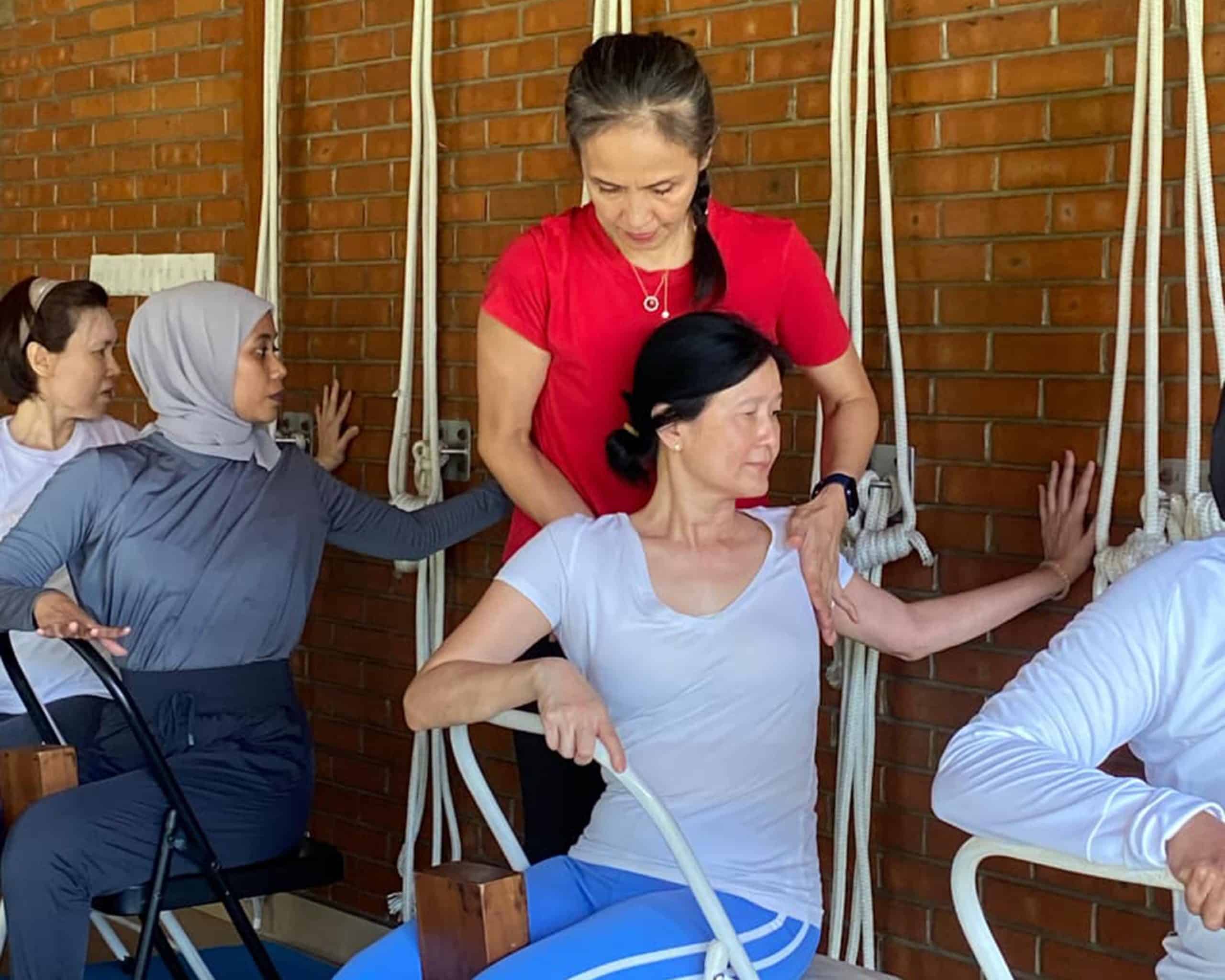
At Yoga Omah Joglo, senior students have always been welcome in Regular Yoga classes, with teachers adjusting instruction and props individually per student, in keeping with the Iyengar approach. But mixed-pace classes come with a real, if unspoken, social friction: older students can feel self-conscious keeping pace with younger, faster-moving classmates, while younger students can feel held back adjusting to a slower rhythm that isn't built for their energy level.
Neither experience is anyone's fault. It's simply a mismatch of pace and expectation, which is precisely why a dedicated Yoga for Seniors class is being introduced: a session paced and paired specifically for an older age group, so nobody feels rushed, and nobody feels like they're holding the room back.
What Seniors Gain From a Consistent Practice
Balance and fall prevention. Reducing one of the most common causes of serious injury in older age.
Joint mobility and flexibility. Keeping everyday movement, sitting, standing, reaching, easier and less painful.
Muscle memory and strength retention. Helping the body hold on to coordination and physical capability, rather than losing it through disuse.
Mental sharpness and agility. Movement that requires focus and body awareness, not passive rest.
General fitness and vitality. Supporting a more active, independent daily life.
These reflect general, well-established benefits of staying active in older age. They are not medical claims specific to any individual, and anyone with existing health conditions should consult their doctor before starting a new practice.
Starting Later Isn't Starting Behind
A common hesitation among older students is the sense that they're "too late" to begin something new, especially something as physical as yoga. But the Iyengar method was built specifically around accessibility: props, individualized adjustment, and progressive development mean a 65-year-old beginning their first class isn't behind a 25-year-old who started years ago. They're simply starting where their body is, which is exactly how the method is meant to work for everyone, at any age.